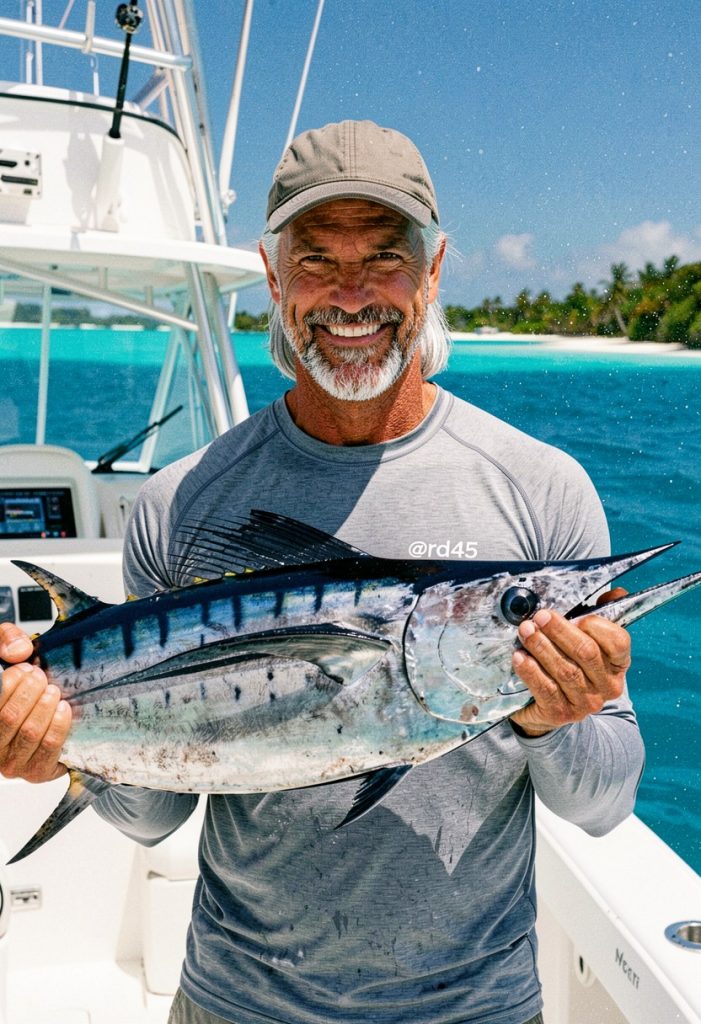
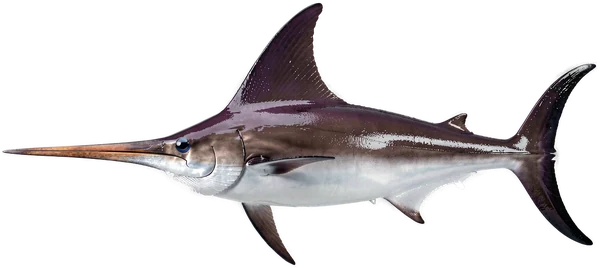
The broadbill swordfish (Xiphias gladius) is the ghost of the deep blue, a heavy-shouldered gladiator that hunts where the sunlight fails. Off Bonaire it is the rarest and most coveted prize we chase, pulled up from water so deep it barely seems possible. And the wild part: that deep water starts just a mile from the dock. With sea temperatures holding a steady 26–28°C all year, the swordfish are down there in every season. It is only ever a question of dropping a bait to the right depth in daylight.
What the swordfish is
A swordfish is built like nothing else that swims. That long, flat bill, the “broadbill”, is a slashing weapon used to stun squid and fish in the blackness. Caribbean swords typically run 100–250 lb, with true trophies climbing far beyond that. They are a solitary, mostly nocturnal predator, spending the daylight hours hundreds of metres down, exactly where we drop our baits to them. Their eyes are huge, their flesh dense and powerful, and pound for pound there is no harder-pulling fish you can land off this island.
Where to find them on Bonaire
Bonaire’s leeward reef wall is the key. It drops from around 9–10 m to open ocean within sight of the dock, and beyond the 60 m marine-park boundary the seabed keeps falling, to 170 m, then plunging on to roughly 750 m where the swordfish live. True deep blue water sits within about a mile of Kralendijk marina, so our lines reach swordfish ground minutes from the harbour. On our longer trips we push toward the deeper drop-offs off the north and northeast coast, where the abyss is closest and the bait sinks straightest.
Best season for swordfish
There is no closed season here. The swordfish are present year-round in Bonaire’s warm water, so the calendar matters far less than the depth. Because the broadbills hold deep through the day, we run our deep-drops in daylight, sending baits to the bottom of the abyss where they hunt.
How we fish for swordfish
This is deep-dropping in its purest form. We send a rigged bait straight down over the abyss on heavy gear and electric reels, with a breakaway weight to punch through 700-plus metres of water and current. It is patient, deliberate work, and then, when the rod loads up, utterly electric. Every trip with us is a private charter for a maximum of six anglers, and the tackle, bait, lures and drinks are all included. You bring the appetite for the deep; we bring everything else.
The fight
A swordfish does not run and jump like a billfish. It slugs. The fight is dogged, heavy, vertical: long minutes of deep, grinding pressure, savage headshakes as that broad bill thrashes, and a back-and-forth war of attrition that can stretch from 45 minutes to well over two hours. It will test your arms, your patience and your gear all at once. Landing one is a genuine achievement, and the moment that sword breaks the surface beside the boat is one you do not forget.
Can you eat it?
Absolutely, and here the swordfish breaks the rule. All billfish such as blue marlin and sailfish are catch-photo-release with us, every time. The swordfish is different: it is one of the finest table fish in the ocean, a prized, rare catch we keep selectively. We take only what is good for the table and never more than that, a thick, meaty fillet to round off a day on the deep blue.
Book your Bonaire swordfish trip
Ready to drop a bait into the deep and chase the broadbill? A swordfish is a specialist’s prize, and it starts with a full-day private charter over the abyss. Book your Bonaire fishing trip with Fishtales and we will put you over the abyss. While the bait sinks, there is fast surface action too, ask us about combining the deep-drop with yellowfin tuna on the FADs for a full day of Bonaire big-game fishing.