People ask me this almost every week: when is the best time to fish Bonaire? The honest answer is that there isn’t a wrong time. Our sea sits at a steady 26 to 28 degrees Celsius all year, so nothing truly shuts off here. There’s no closed season, no dead month. What changes is which fish are running hardest and how the wind behaves. Let me walk you through it the way I’d explain it to a guest on the dock.
Why Bonaire fishes all year
Most fishing destinations have a hard on-and-off switch. Bonaire doesn’t. That steady warm water keeps bait in the area and keeps predators feeding twelve months a year. So the real question isn’t whether you’ll catch fish, it’s which species you’re chasing and what kind of conditions you’d enjoy most. Whether you come in January or July, there’s always something biting offshore.
Offshore peaks, species by species
Out in the blue, every species has its strong window. Here’s how it shakes out across the year for big game fishing on Bonaire:
| Species | Peak window |
| Wahoo | Cooler months, October to April |
| Mahi-mahi | Cooler months, October to April |
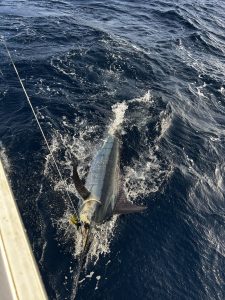
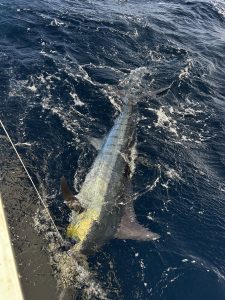
| Blue marlin | Strongest June to October, plus a December to February showing |
| Sailfish | November to April |
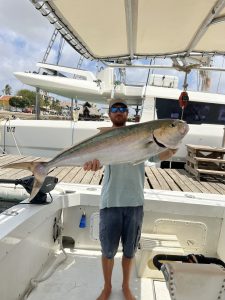
| Yellowfin tuna | Year-round |
| Blackfin tuna | November to March |
So if your heart is set on a screaming wahoo run or chasing color with mahi-mahi, aim for the cooler months. If blue marlin is the dream, the summer-into-fall stretch is your best shot, with a smaller window again in the heart of winter. And yellowfin tuna? They’re around all year, which makes them a reliable bend in the rod no matter when you book.
Wind and water: what to expect
The other half of the picture is the trade winds. They blow hardest roughly February through August, often 15 to 25 knots and sometimes more. From September into January, they ease off and things get gentler. That matters for comfort offshore.
But here’s the local detail that surprises people: the leeward, or western, coast stays calm year-round. We’re tucked in the lee of the island, so even when the trades are honking on the windward side, our launch and our inshore grounds are protected. That’s a big reason we can run trips all twelve months without weather constantly cancelling on us.
A rough month-by-month feel
Here’s the quick mental map I give people planning a trip:
- October to April: Prime time for wahoo and mahi-mahi, with sailfish in the mix from November. Blackfin tuna peak November to March, and there’s a winter window for blue marlin around December to February. Wind is generally lighter into January, building as you move toward spring.
- May to August: The trades blow their hardest, so offshore days are sportier. This is when blue marlin start to come on strong, building toward their summer-to-fall peak. Yellowfin keep producing.
- June to October: The heart of blue marlin season. Yellowfin tuna stay reliable throughout.
- September to January: Winds ease, conditions soften. A comfortable, versatile stretch with cooler-month species starting to fire up again toward the end.
And through every one of those months, the leeward coast stays calm. There is no bad time to wet a line here.
So when should you come?
Pick your target. Chasing wahoo, mahi or sailfish? Lean toward the cooler months, October through April. Dreaming of blue marlin? Aim for summer into fall. Want the gentlest conditions overall? September into January is hard to beat. Just here to bend a rod and enjoy the Caribbean? Honestly, any week works, that’s the beauty of Bonaire.
If you’re still not sure which window fits your trip, just ask. Tell me what you want to catch and when you can travel, and I’ll point you to the right week. When you’re ready, book a fishing trip and we’ll get you on the water. Pricing and availability are on request, and I’m always happy to talk it through before you commit.