One of the first questions I get on the boat is simple: “Captain, what can we actually take home for dinner?” It’s a fair question, and an important one. Bonaire is a special place to fish, and part of fishing here responsibly is knowing which species go in the cooler and which go back over the side. Here’s the honest, on-the-water answer on Bonaire fishing and what you can keep.
Why Bonaire has rules in the first place
Bonaire sits inside the Bonaire National Marine Park, managed by STINAPA. The whole point of the park is to protect the reef and the life that depends on it, so the fishery stays healthy for the next generation. A responsible charter fishes inside those rules, full stop. There’s a marine-park nature fee that helps fund this protection, and as a visitor you contribute to keeping these waters as good as they are. None of this gets in the way of a great day on the water. The offshore game species we target are excellent eating and perfectly legal to keep.
The good eating fish you can keep
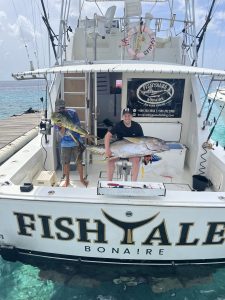
This is where Bonaire shines. The open water off the island holds fast, hard-fighting pelagic fish that also happen to be some of the best on the plate. These are the species we aim for, and the ones that earn their place on the grill:
- Wahoo, blistering runs and clean, firm white meat.
- Mahi-mahi, bright, acrobatic, and a crowd favourite at the table.
- Tuna, both yellowfin and blackfin, superb fresh.
- Red snapper and silk snapper, prized reef-edge eating fish.
- Red hind grouper, a smaller grouper that’s good to keep.
- Small barracuda, fine eating at modest size.
A word on that last one. Small barracuda are good to eat, but large barracuda carry a ciguatera risk, so we release the big ones. It’s not worth gambling with your stomach, and a big ‘cuda is a great fight you can enjoy and let swim off strong.
The fish that always go back
Some species are protected here and are always released, no exceptions. These are the reef-builders, the grazers and the slow-growing fish that the marine park exists to safeguard. If we hook one, we handle it carefully and send it home:
- All parrotfish, the reef’s cleaners and gardeners.
- Queen triggerfish.
- Nassau, Goliath and marbled grouper.
- Mutton and cubera snapper.
- Conch.
- All sharks and all rays, the whole zone is a sanctuary for them.
Notice that not every grouper or snapper is in the same boat. Red hind grouper and red snapper are keepers, while Nassau grouper and cubera snapper are protected. That’s exactly why it pays to fish with a captain who knows the difference at a glance. We sort it out for you, so you never have to guess.
Billfish: the ones we let go on principle
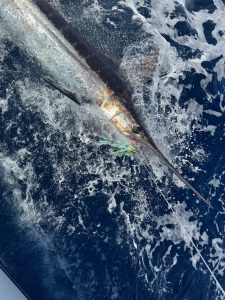
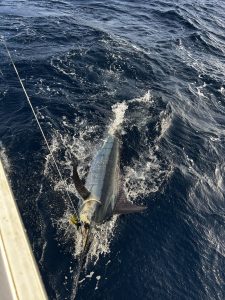
Marlin and sailfish are the trophies of these waters, and hooking one is a memory that stays with you. By charter norm, all billfish here are catch-and-release. A blue marlin is far too valuable swimming free to end up on a dock. We get the photos, revive the fish properly, and watch it power back into the blue. That’s the right way to treat these animals, and honestly it’s the more thrilling kind of catch.
Keep or release, at a glance
| You can keep | Always released |
|---|---|
| Wahoo, mahi-mahi, tuna | All parrotfish |
| Red and silk snapper | Queen triggerfish |
| Red hind grouper | Nassau, Goliath, marbled grouper |
| Small barracuda | Mutton and cubera snapper |
| Conch, all sharks and rays | |
| All billfish (marlin, sailfish) |
One last honest note
Rules change. STINAPA updates regulations as the science and the needs of the park evolve, so always verify the current STINAPA rules before any trip. On our boat that part is taken care of. We fish inside the marine-park rules every single day, we know what’s a keeper and what isn’t, and we’ll make sure you go home with a clear conscience and, when the fish cooperate, a cooler of wahoo or mahi for the grill.
Want a day on the water where the rules are handled and the only thing you focus on is the next bite? Book a fishing trip with Fishtales and let’s go find them. Any questions about what’s biting or what’s in season, just ask, that’s what I’m here for.